Documents by The Founding Fathers Regarding Separation of Church and State

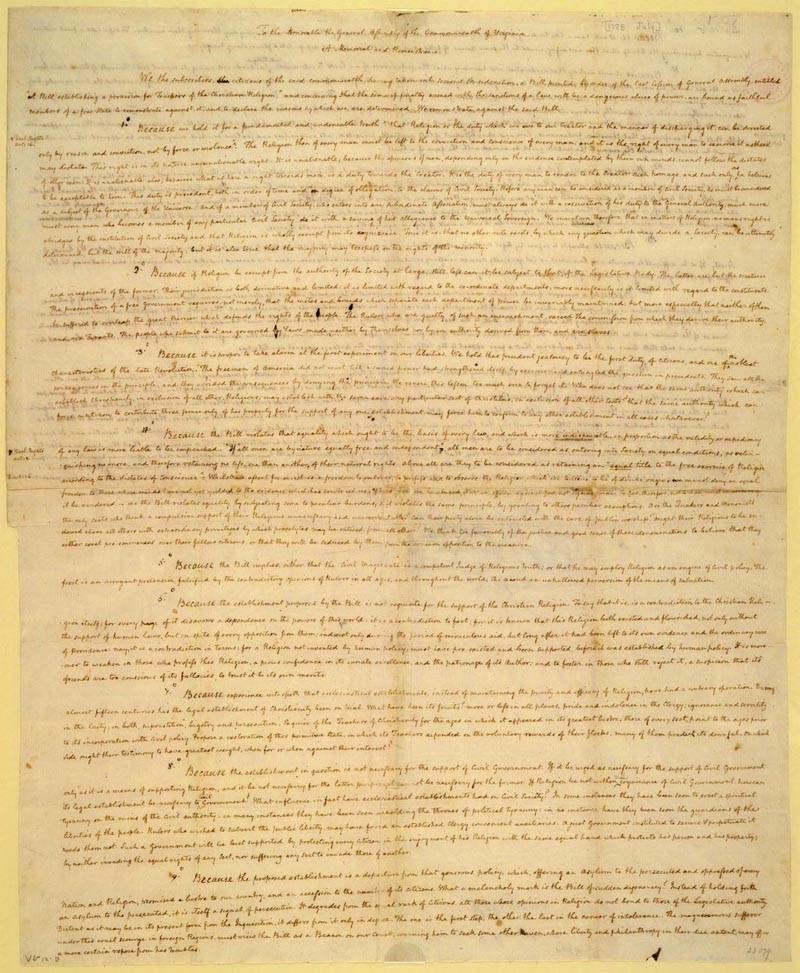
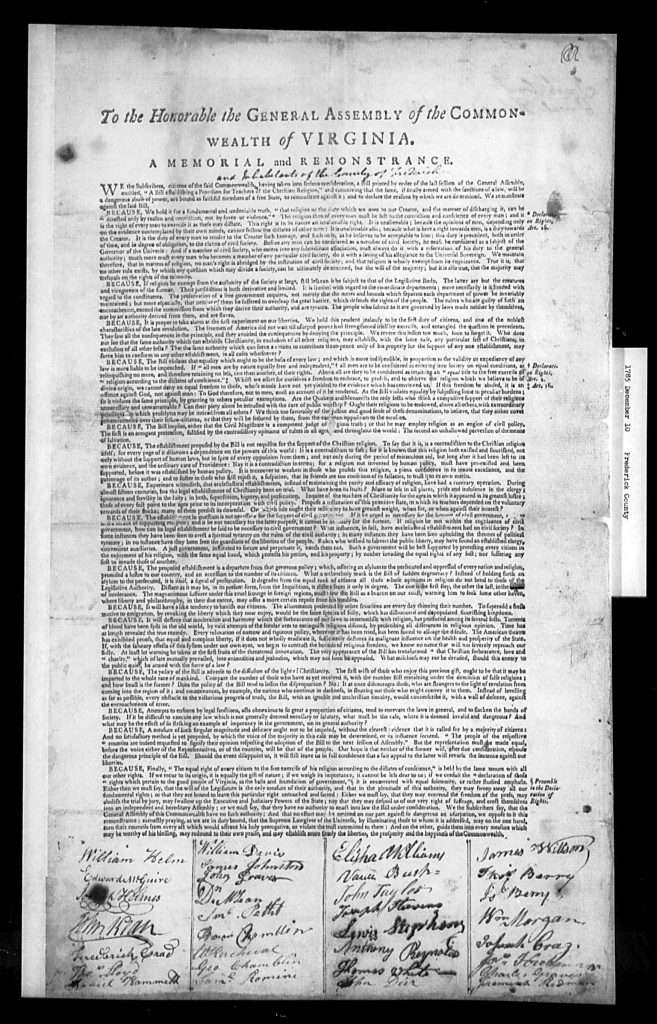
A Memorial and Remonstrance

To the Honorable the General Assembly of the Commonwealth of Virginia A Memorial and Remonstrance We the subscribers, citizens of the said Commonwealth, having taken
Read More »

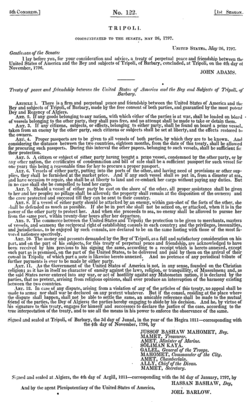
Treaty of Tripoli

Treaty Of Peace and Amity between the United States of America and the Bashaw, Bey and Subjects of Tripoli in Barbary. Article 1st There shall
Read More »
Thomas Jefferson's Letter to The Danbury Baptists

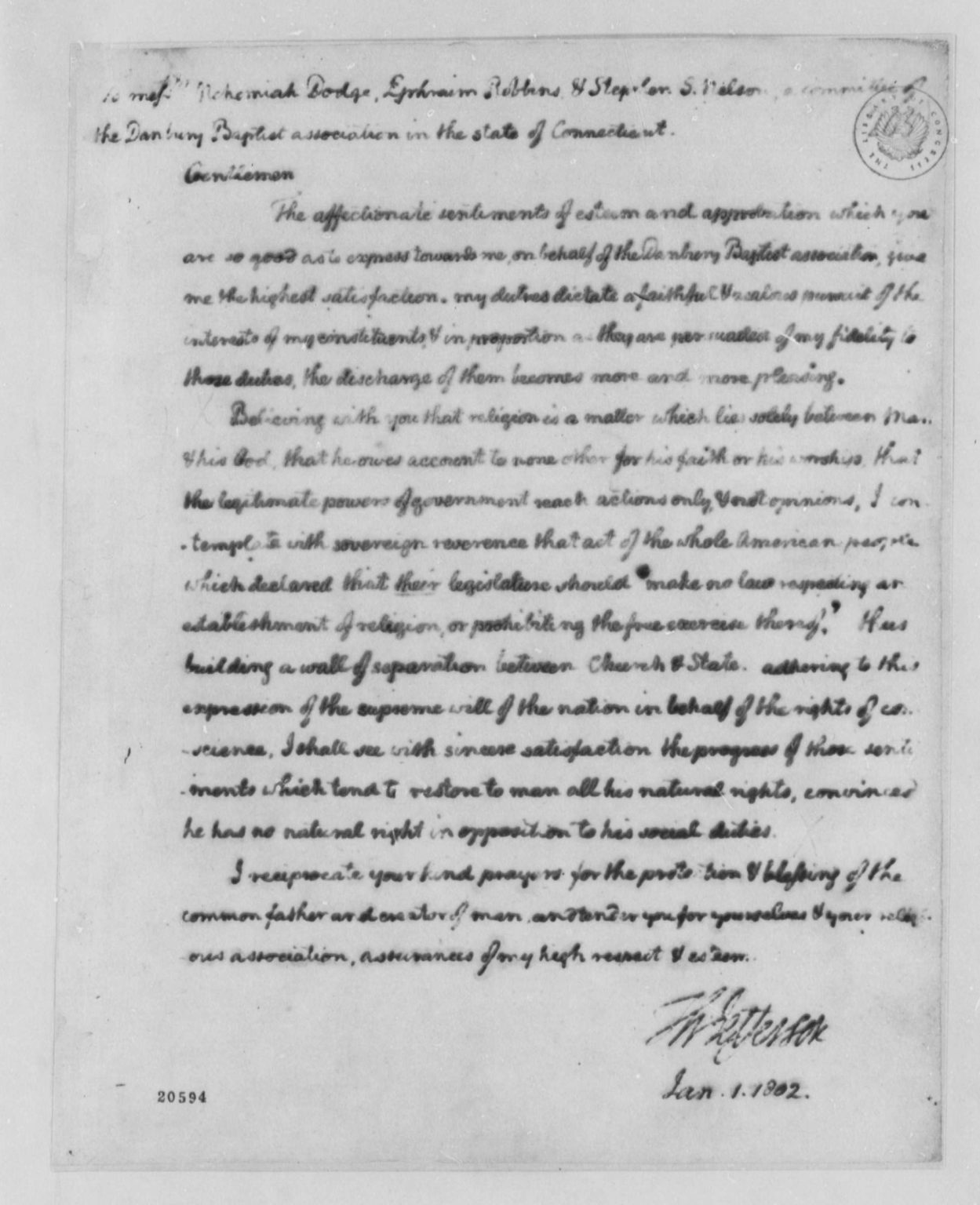
Letter to the Danbury Baptists

To messers. Nehemiah Dodge, Ephraim Robbins, & Stephen S. Nelson, a committee of the Danbury Baptist association in the state of Connecticut. Gentlemen The affectionate

Read More »

The phrase “separation of church and state” does not appear in the U.S. Constitution itself, but the idea comes from the First Amendment (“Congress shall make no law respecting an establishment of religion, or prohibiting the free exercise thereof”) and was clarified by the Founding Fathers in their writings and letters. Here are some key perspectives:


Thomas Jefferson

  • In an 1802 letter to the Danbury Baptist Association, Jefferson famously wrote of building “a wall of separation between Church & State.”

  • He wanted to assure Baptists (a minority at the time) that the federal government would not interfere with religious freedom or establish a national church.


James Madison

  • Known as the “Father of the Constitution,” Madison strongly supported religious liberty.

  • In his Memorial and Remonstrance Against Religious Assessments (1785), he argued against government funding of religious institutions:
    “The Religion then of every man must be left to the conviction and conscience of every man; and it is the right of every man to exercise it as these may dictate.”

  • He warned that government involvement in religion would corrupt both government and religion.


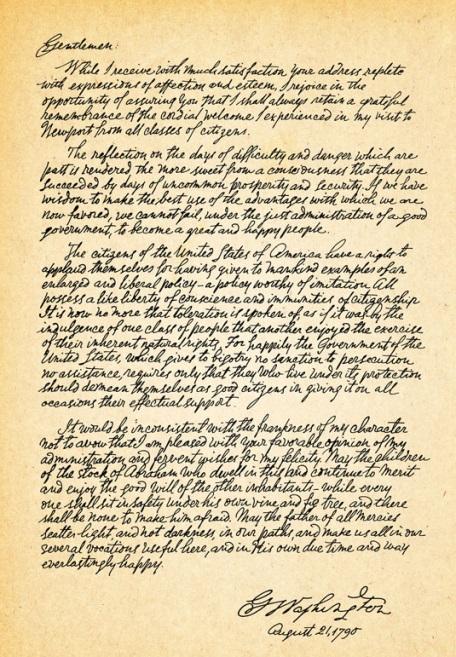
George Washington

  • Washington supported freedom of conscience, though he was less explicit about “separation.”

  • In his 1790 letter to the Hebrew Congregation in Newport, he affirmed that the government “gives to bigotry no sanction, to persecution no assistance,” highlighting religious liberty as a core principle.


Benjamin Franklin

  • Franklin was pragmatic about religion, seeing its value for morality and social order but not supporting state enforcement of belief.

  • At the Constitutional Convention, he suggested prayer but acknowledged that the Constitution itself avoided establishing religion.


John Adams

  • Adams believed morality and religion were important for a republic, but he still supported constitutional limits.

  • In the Treaty of Tripoli (1797), which he signed and the Senate ratified unanimously, it was declared:
    “The Government of the United States of America is not, in any sense, founded on the Christian religion.”


In summary:
The Founding Fathers held a consistent view that religion should be free from government control and government should avoid establishing religion. Jefferson and Madison were strongest in calling for strict separation, while Washington and Adams emphasized religious liberty and tolerance. Collectively, they saw religious freedom as essential to a healthy republic.